Recent insights.
Revenue leakage vs revenue recovery: naming the problem before you fix it.
Leakage is the symptom; recovery is the cure. Most operators feel the leak but can't locate it. Here's how to find yours.
Referral concentration risk: the operating metric hiding in your census.
When a few sources carry most of your volume, you're one departure from a revenue shock. A measurable metric.
Revenue recovery vs revenue cycle management: why RCM software won't find dormant referrals.
RCM collects on the visits that happened. Recovery finds the relationships that stopped sending them.
Revenue Lens: the AI-powered methodology behind revenue recovery.
The seven-dimension diagnostic that finds revenue already earned but not collected — and why partnerships sit at Dimension 6, not Dimension 1. The foundational methodology piece.
What "AI for revenue recovery" actually means inside a healthcare portfolio.
The methodology layer is the product. The AI is the way it scales across 40 sites. A practitioner-grade definition that survives diligence.
How AI finds dormant referral partners that aggregate metrics hide.
Time-stamped relationship graphs vs aggregate volume reporting. The five reasons concentration risk doesn't surface until it's already structural.
The 48-hour AI Revenue Intelligence diagnostic — what it actually does in 48 hours.
Day-by-day breakdown of the diagnostic from data handoff to board-ready output. No vendor pitches. Just the workflow.
Hospice referral revenue: why eligibility rules quietly shrink your referral base.
When eligibility scrutiny rises, referrers hesitate — and the ones who go quiet rarely come back on their own.

DSO referral revenue: the GP-to-specialist pipeline most dental groups never measure.
The internal pipeline leaks quietly, high-value cases walk out, and the production report hides all of it.
Revenue Lens: what it is and why PE firms pay for it.
The brand-term primer for operating partners: the seven dimensions, why the revenue never shows in the P&L, and the $72M senior-living case behind the methodology.
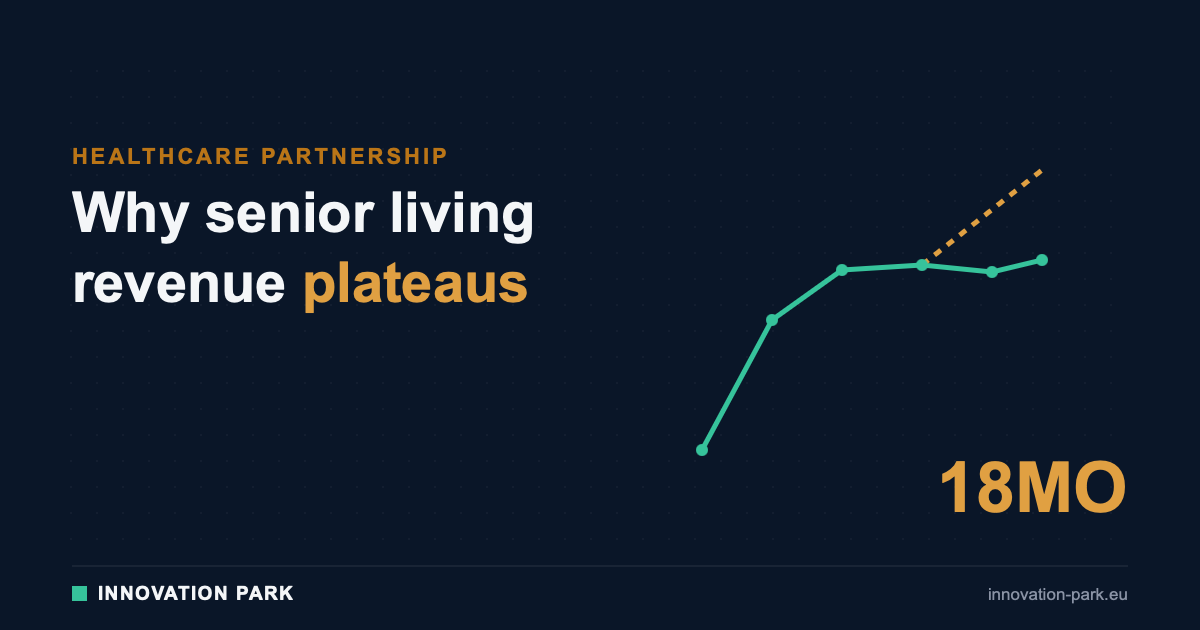
Why senior living referral revenue plateaus 18 months after PE acquisition.
The post-acquisition handoff between sales motion and operator-led referral architecture is where revenue goes quiet. Five structural reasons.
Discharge planner relationships: the home-health revenue line nobody manages.
Why the most valuable referrer category in home health has no owner inside most multi-location operators, and the 72-hour signal protocol that fixes it.
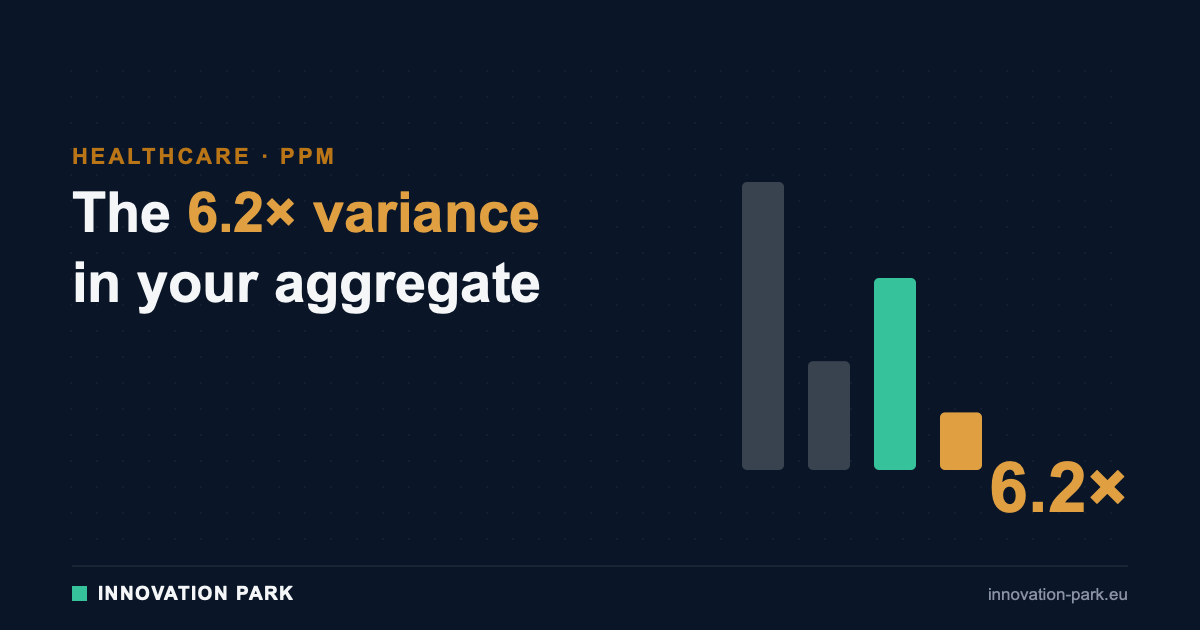
Dermatology PPM referral revenue: the 6.2× variance hiding in your aggregate.
Why the top-converting derm site in a 12-location PPM is doing 6× the dermatologist-to-cosmetic referral conversion of the worst — and what to do about it.
Association non-dues revenue: turning a member network into a defensible partner channel.
The real asset isn't sponsorships — it's a trusted member network partners will pay to reach.
Partner-influenced vs partner-sourced: the attribution policy your board can defend.
Most SaaS partner programs report a single attributed-revenue number. Diligence teams disqualify it in 15 minutes. The governance layer that survives the cross-examination.
Pre-acquisition partner-revenue diligence: what a careful buyer actually checks.
The seven-line audit we run on a SaaS partner program before a sponsor commits. What survives the audit, what doesn't, what the haircut looks like.
Horizon Europe vs Eurostars: which non-dilutive funding fits a non-EU entrant.
Two different non-dilutive routes — size, speed, consortium burden, and fit. Choose by stage, not grant size.
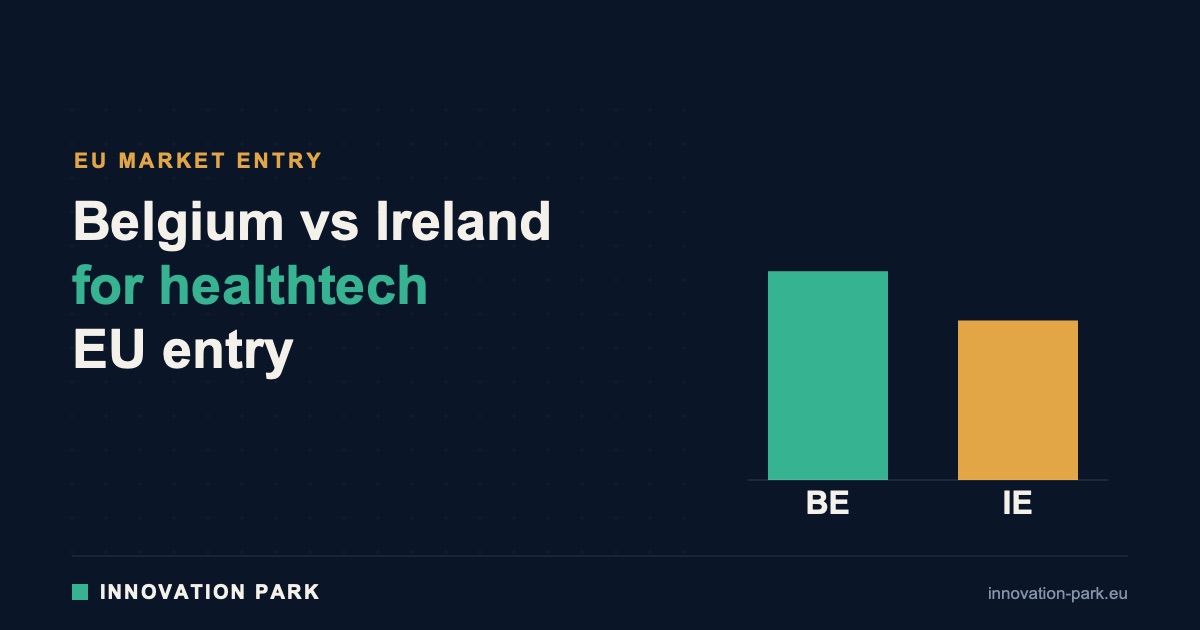
Belgium vs Ireland: where should a healthtech company actually build its European future?
Ireland is where global healthcare comes to operate; Belgium is where it's built. The honest comparison — clinical trials, Horizon Europe, and the 3.75% effective IP rate — for a founder choosing a European base.
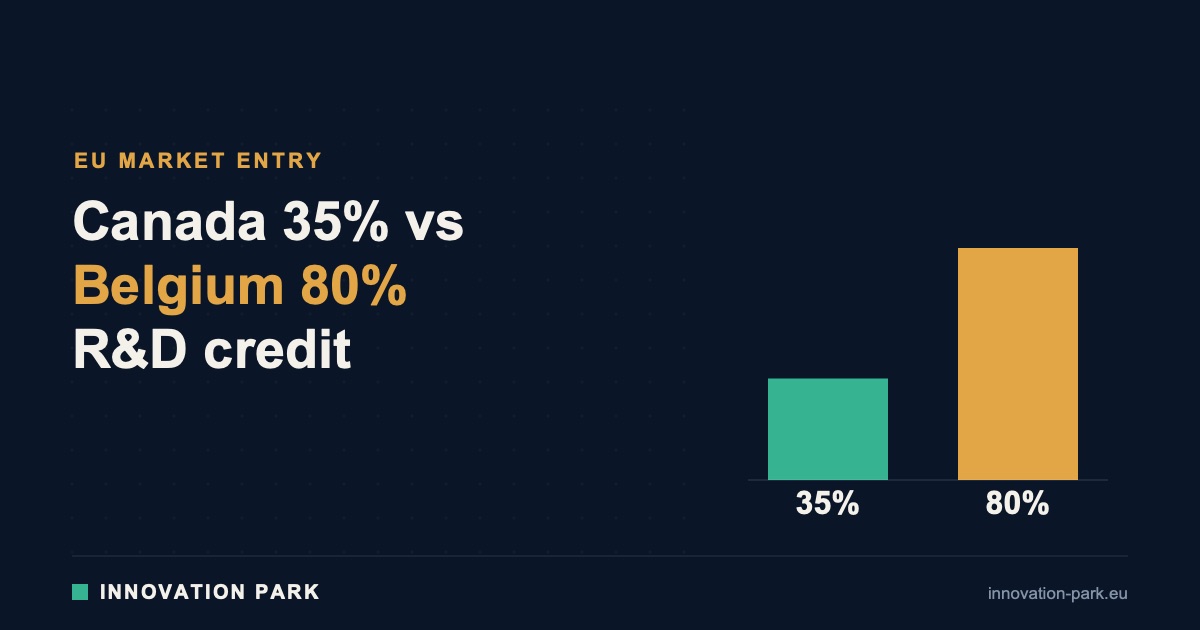
Canada's R&D credit is 35%. Belgium's is 80%. Here's why that comparison misleads.
The two numbers measure completely different things. A step-by-step comparison with real dollar calculations — and the additional layers (VLAIO, Innovation Deduction, Horizon Europe) that decide it.
The wealth-management playbook is shifting: dual-use innovation is where the smart money is moving.
Investors are reallocating toward dual-use tech. Belgium — host to NATO HQ and the EDA — sits on a funding stack most founders miss: VLAIO, the €1.65B EIC dual-use call, and the NATO Innovation Fund.
VLAIO programme manager relationships: how the institutional door actually opens.
The grant landscape isn't where non-EU companies fail. They fail at the institutional sequencing. The actual order: FIT → VLAIO → imec → KU Leuven LRD → UZ Leuven clinical.
The always-on dormancy scanner: AI System Integration after the diagnostic.
What the $5K–$10K/mo retainer actually runs inside a portfolio. Agents that monitor dormancy, concentration alerts, weekly briefs — without a new tooling stack.
Why we don't sell an AI platform: methodology as the product, AI as the spine.
The structural reason "AI platform" claims fail at diligence — and what to put in the engagement letter instead.
Revenue Recovery Estimator — calibrated against 1000+ company audits.
Five inputs. Sixty seconds. Sector-benchmarked estimate of dormant referral revenue inside your network. Free, no email required.
Partnership Revenue Maturity Assessment.
Twelve-question diagnostic across attribution governance, dormancy detection, concentration-risk awareness, and reactivation protocol. Score 0–40.
RevOps for healthcare: what the SaaS playbook gets right and what it misses.
The translation problem between SaaS RevOps vocabulary and multi-location healthcare referral architecture. What ports across, what doesn't.
Which portcos to start with: a triage rubric for revenue recovery.
With 30 companies at different stages, the question is where to start. A four-factor rubric for the first, most convincing engagement.
What data a portfolio company actually needs to provide (and the security answer).
One read-only extract, no system access, no integration. The data ask that removes the IT-and-security blocker.
Running the free Revenue Recovery tool across the whole portfolio yourself.
An operating partner can screen every portco in an afternoon — no data export, no email — to build a ranked recoverable-revenue map.
Reporting recovered revenue to the IC and LPs.
A win only counts if it's believed. The difference between a claimed number and a credited one is attribution.
Recovering revenue after a bolt-on: integration dormancy in buy-and-build.
Integration quietly severs referral relationships. The revenue goes dormant, not lost — recover it during integration, not years later.
The PE AI value gap: why portfolio AI pilots don't hit the P&L (and what does).
PE committed to AI but the returns lag. The gap isn't the tech — it's where the AI lands. The pillar.
The revenue lever PE keeps underusing: AI growth vs AI cost-cutting.
Most portfolio AI pulls the cost lever. The growth lever sits underused with an execution gap recovery closes.
One playbook, 30 portcos: making AI revenue recovery repeatable.
The hardest part of portfolio AI is repeatability. One method that runs identically on every portco.
Does AI revenue recovery improve the exit multiple?
Recovered revenue lifts EBITDA — but governed, durable revenue is underwritten at a higher multiple.
The AI Operating Partner's first 90 days on revenue.
Under pressure to show a win? Skip the efficiency pilots. A 90-day plan for a defensible P&L result.
The SIGNAL Brief — every Friday.
One pattern. One number from the dataset. One door that just opened. One thing we built last week. 4-minute read. No pitch.